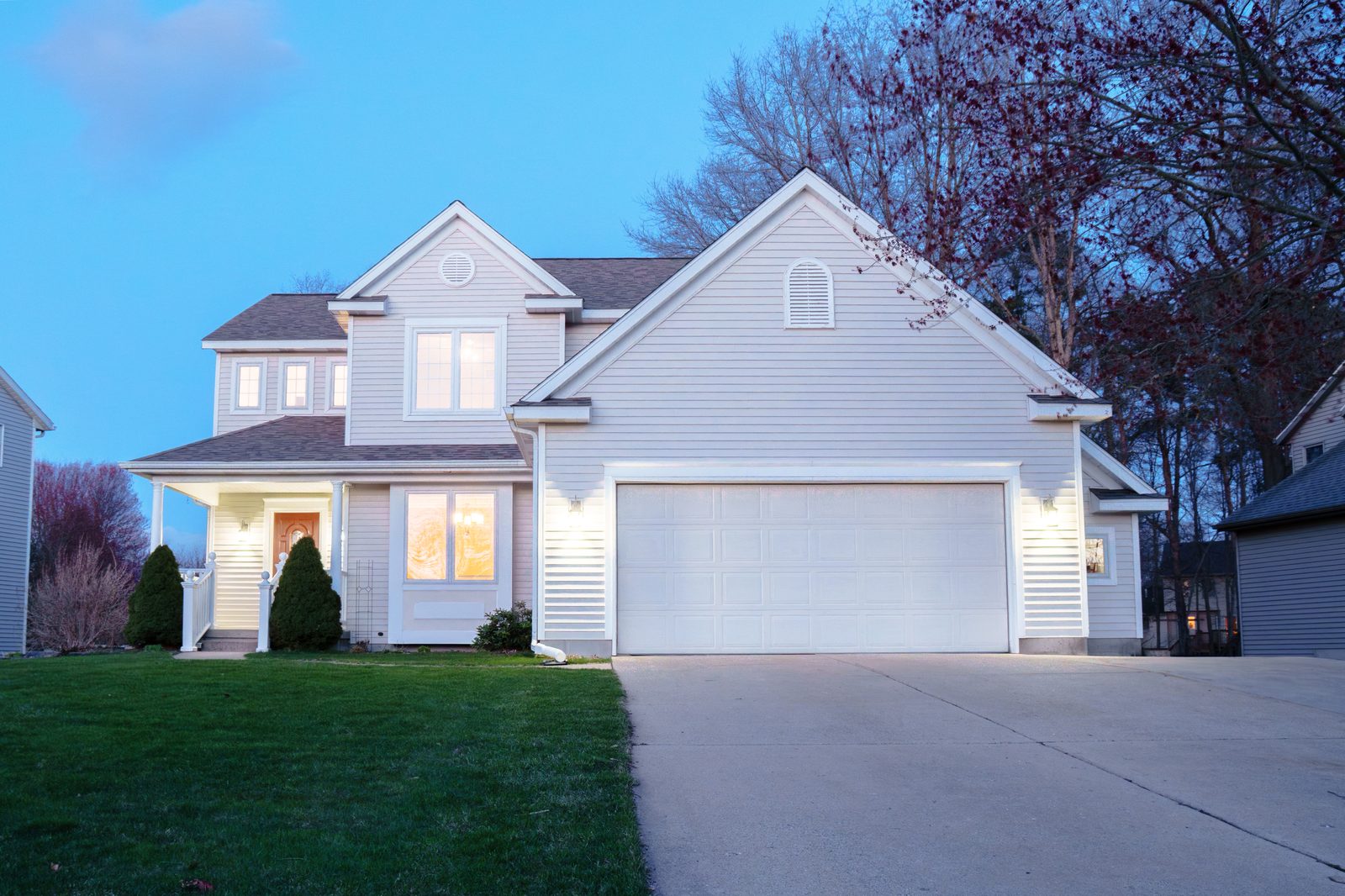
Drone footage sells listings. Aerial perspectives show the lot size, the neighborhood, the proximity to parks or water — context that ground-level photos can't convey. But a lot of agents in West Michigan are hiring drone photographers without knowing what's actually required to fly legally. And in some parts of Grand Rapids, flying without authorization is an FAA violation.
Here's what you need to understand before your next listing with aerial photos.
The FAA Part 107 requirement
Any drone flown commercially in the U.S. — including for real estate marketing — must be operated by a pilot with an FAA Part 107 Remote Pilot Certificate. This is a written exam administered by the FAA. It covers airspace classification, weather, emergency procedures, and regulations specific to commercial UAS operations.
If you hire a photographer who flies commercially without a Part 107 certificate, both you and they can face FAA enforcement action. "I didn't know" is not a defense. When you hire a drone operator, ask for their certificate number and verify it at FAA Airmen Inquiry — it takes 30 seconds.
Grand Rapids airspace — what's actually controlled
Gerald R. Ford International Airport (KGRR) sits southeast of downtown Grand Rapids and creates a Class C airspace bubble that extends several miles in all directions. Flying in Class C without authorization is illegal.
The areas most commonly affected include:
- Kentwood, Wyoming, and southeast Grand Rapids — within the primary KGRR Class C ring, requiring LAANC authorization for any flight
- Byron Center and Caledonia — often within the outer Class C ring depending on altitude
- East Grand Rapids and Ada — generally outside Class C but worth checking per-address
- Rockford, Grandville, Lowell — typically uncontrolled Class G airspace with no authorization needed below 400 feet
The only reliable way to check a specific address is FAA's LAANC system through an app like AirMap, Aloft, or the DJI Fly app. Your photographer should be doing this before every single shoot.
What LAANC authorization means
LAANC (Low Altitude Authorization and Notification Capability) is the FAA's near-real-time authorization system for controlled airspace. In most cases, authorization is granted automatically within seconds through a compliant app. In some grid squares, the altitude ceiling may be 0 feet, meaning no flight is permitted without a manual waiver — which takes days to weeks to obtain.
A professional drone operator checks LAANC before every shoot. If they don't, find someone else.
What the Part 107 exam actually covers
Agents sometimes ask why a certificate matters if the pilot is just flying around a house. The exam exists because commercial drone operations require understanding of:
- Airspace classification and how to read sectional charts
- Weather interpretation and how conditions affect small UAS
- Emergency procedures and right-of-way rules
- Crew resource management and risk mitigation
- FAA regulations specific to commercial UAS (Part 107 rules)
A pilot who has passed Part 107 has demonstrated basic competency. One who hasn't has no verifiable training whatsoever.
The privacy and liability angle
Beyond FAA regulations, Michigan has specific laws around drone surveillance and photography of private property. Flying over a neighbor's yard, capturing footage of adjacent properties without consent, or flying below 400 feet over someone else's land without permission can create liability for both the operator and the person who hired them.
For real estate specifically, this means: a legitimate drone operator will fly over the listed property, keep the camera pointed toward the subject property, and avoid hovering over neighbors. If your photographer is getting wide neighborhood shots that include detailed views of adjacent homes without any apparent effort to avoid them, that's a flag.
What to ask before you book
Three questions that take 60 seconds:
- "Do you have a Part 107 certificate?" If yes, ask for the certificate number and check FAA Airmen Inquiry.
- "How do you handle controlled airspace?" The right answer involves LAANC and checking the address before the shoot.
- "Is your drone registered with the FAA?" Any drone over 0.55 lbs used commercially must be registered. This is basic and takes minutes.
A professional gives you confident, specific answers to all three. A hobbyist who upgraded to "doing real estate on the side" probably can't.
Real estate photography starting at $245. Book a Listing Shoot
Have questions about a specific address or airspace situation? Feel free to reach out — I check LAANC for every shoot and am happy to tell you in advance what's possible at a given location.